
Éric Ledeuil
Fête à Camelot
PDF
voir
Éric Ledeuil
Fête à Camelot
- Formation Flûte traversière et Harpe
- Compositeur Éric Ledeuil
-
Niveau de difficulté
- Édition Partition
- Maison d’Édition Alphonse Leduc
- N ° de commande AL30740
 sera expédié dans 3-6 jours ouvrables
TVA incluse,
Hors frais de port
Non disponible dans tous les pays. Apprendre encore plus
Description:
Teacher, soloist, chamber musician, conductor and composer - Flautist Eric Ledeuil, a student of Patrick Gallois and Benoît Fromanger, wears many hats. This diversity continually enriches his educationalwork, as can be seen by the success of his flute method La flûte imaginative, published by Leduc in two volumes (AL 30 365 and 30 367).
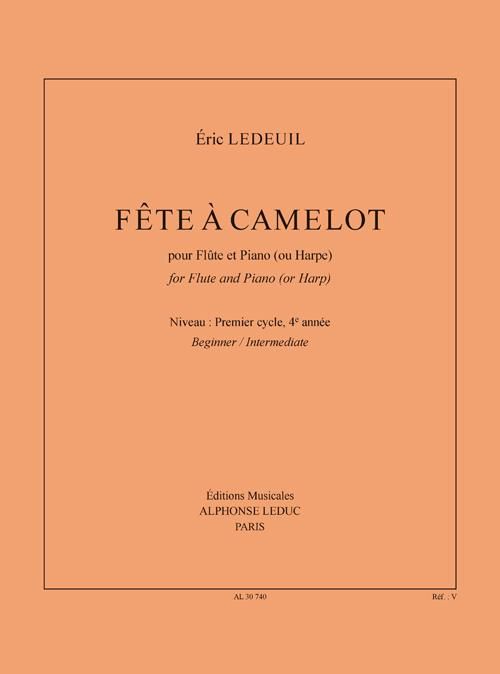
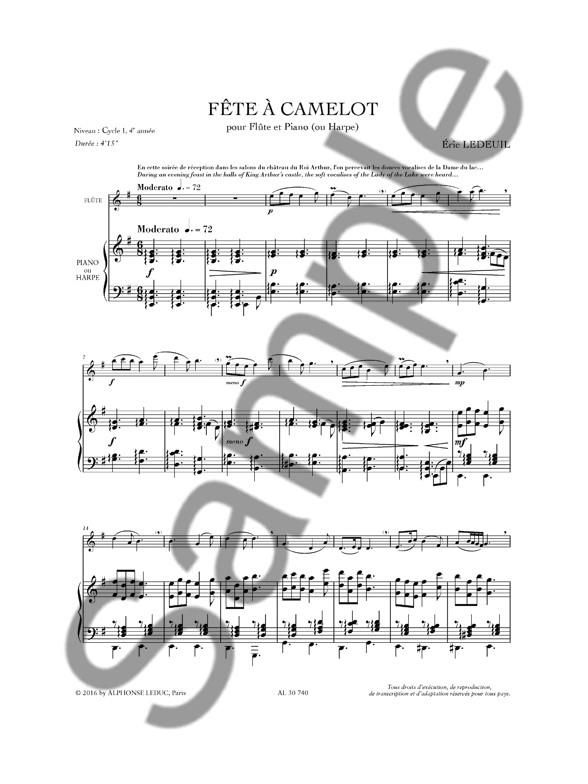
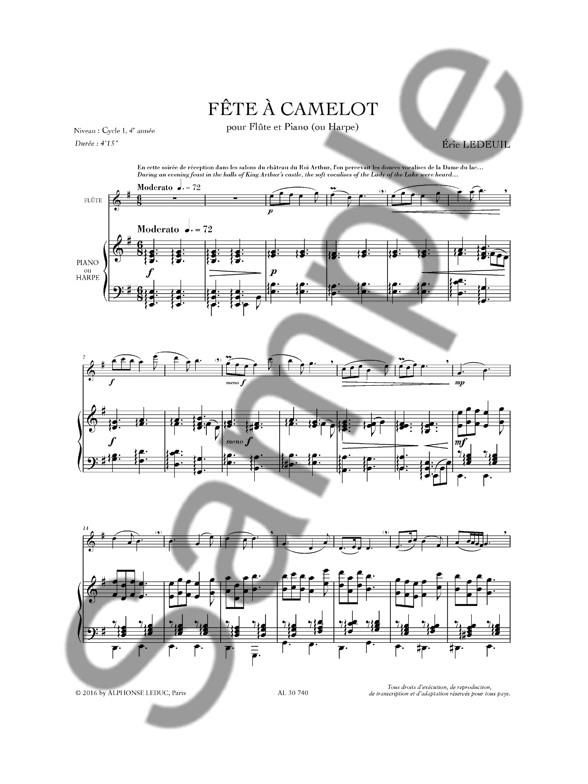
Fête à Camelot, a piece for Flute andPiano (or Harp) for fourth-year students, reconnects with the Knights of the Round Table, an imaginary world that has long been a source of musical inspiration for Ledeuil: the key figures of the legend appear inhisLes Méandres de Viviane (AL 30 495, Beginner) and Les Mystères de Brocéliande (AL 29 589, Intermediate).
This work is set in King Arthur'sfortress: the great halls ring out with the sounds of joyful festivities, interspersed with echoes of Viviane's song. A Knight's story of his quest for the Holy Grail is followed by the furtive appearance of Morgan leFay, but she gives way to the Lady of the Lake - Viviane - whose distant melody shrouds itself in melancholy tones. The work concludes with a fisel, a traditional Breton dance that whips the troubadours'enchanted instruments into a frenzy.
Fête à Camelot, a piece for Flute andPiano (or Harp) for fourth-year students, reconnects with the Knights of the Round Table, an imaginary world that has long been a source of musical inspiration for Ledeuil: the key figures of the legend appear inhisLes Méandres de Viviane (AL 30 495, Beginner) and Les Mystères de Brocéliande (AL 29 589, Intermediate).
This work is set in King Arthur'sfortress: the great halls ring out with the sounds of joyful festivities, interspersed with echoes of Viviane's song. A Knight's story of his quest for the Holy Grail is followed by the furtive appearance of Morgan leFay, but she gives way to the Lady of the Lake - Viviane - whose distant melody shrouds itself in melancholy tones. The work concludes with a fisel, a traditional Breton dance that whips the troubadours'enchanted instruments into a frenzy.