
Francesco Cavalli
Scipione Affricano
Dramma per musica - Venedig 1664
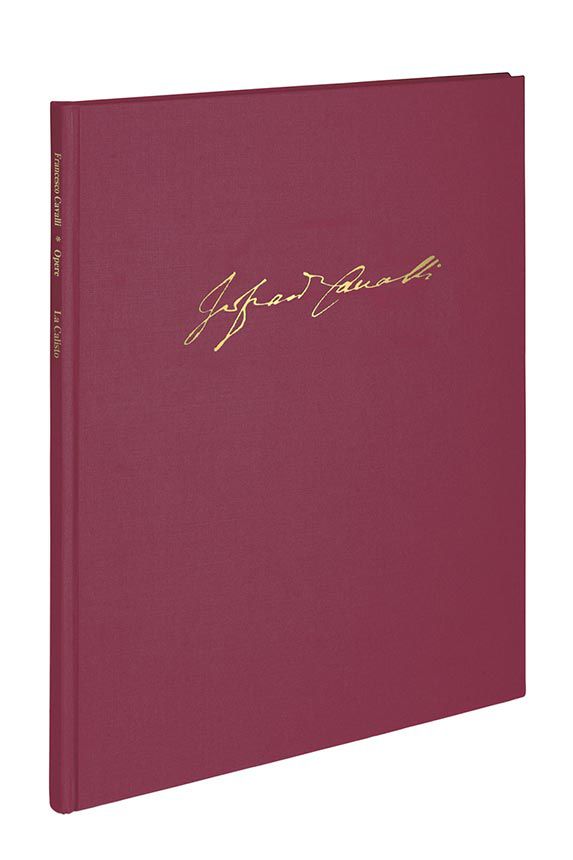
Francesco Cavalli
Scipione Affricano
Dramma per musica - Venedig 1664
- Formation Orchestre
- Compositeur Francesco Cavalli
- Série Francesco Cavalli. Opere
- Éditeur Sara Elisa Stangalino Jennifer Williams Brown
- Édition Partition
- Maison d’Édition Bärenreiter Verlag
- N ° de commande BA8904-01
 sera expédié dans 2-4 jours ouvrables
TVA incluse,
Hors frais de port
Non disponible dans tous les pays. Apprendre encore plus

Description:
In 1662, Cavalli's career was at its zenith. The two dozen operas he had written for Venice had helped establish Venice as the world's first operatic superpower. "Scipione Affricano" (Venice 1664), Cavalli's first opera after returning from France, was one of his most successful compositions. In a period that valued new works over familiar ones, "Scipione" was one of a handful of operas to live on after its premiere season: it was revived eight times and chosen to inaugurate Rome's Teatro Tordinona in 1671.
Cavalli's librettist, Nicolò Minato, was inspired by historical accounts of the life of the Roman general Scipio, whose defeat of Carthage in 202 BCE earned him the honorary agnomen "Africanus." In setting Minato's libretto, Cavalli drew upon the lyrical gifts that have made operas like "La Calisto" and "Giasone" so popular today. But at the same time "Scipione Affricano" also shows the composer embracing aspects of his two years in France, and responding to musical changes that, in the 1660s, were rapidly altering the face of Italian opera: the growing dominance of arias, a clearer sense of aria organization, and increased interplay between voice and instruments.
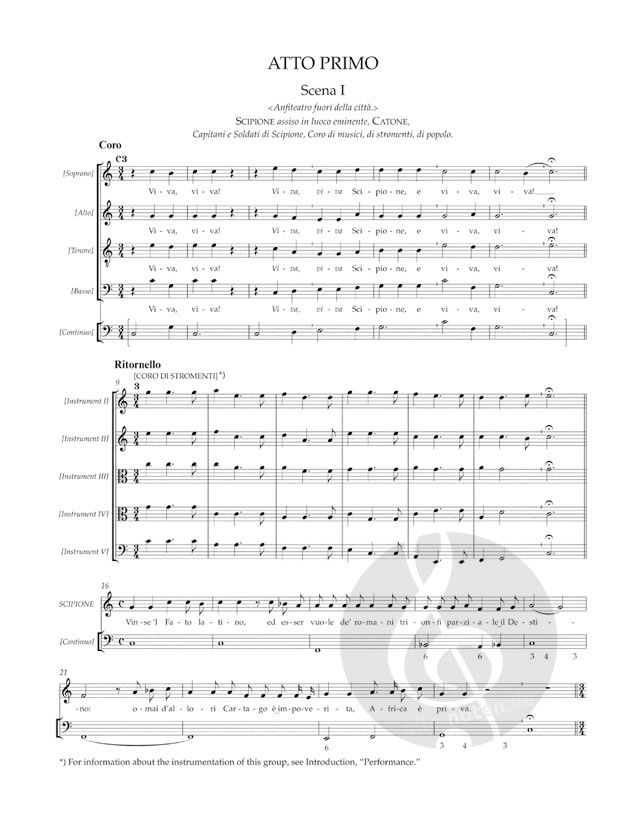
The first goal of this edition is a practical one: to develop a version of the opera suited to the needs of both professional and student performers. A second goal is to reconstruct the opera's complete performance history. An amply documented appendix reconstructs earlier versions of 21 arias. Other appendices print the surviving additional music from revivals in Rome and Venice. The edition is framed by a substantial Introduction, covering the drama, the musical style, the composition, premiere, and revivals, and a guide for performance today, plus a detailed "decoding" of the sources.
Cavalli's librettist, Nicolò Minato, was inspired by historical accounts of the life of the Roman general Scipio, whose defeat of Carthage in 202 BCE earned him the honorary agnomen "Africanus." In setting Minato's libretto, Cavalli drew upon the lyrical gifts that have made operas like "La Calisto" and "Giasone" so popular today. But at the same time "Scipione Affricano" also shows the composer embracing aspects of his two years in France, and responding to musical changes that, in the 1660s, were rapidly altering the face of Italian opera: the growing dominance of arias, a clearer sense of aria organization, and increased interplay between voice and instruments.
The first goal of this edition is a practical one: to develop a version of the opera suited to the needs of both professional and student performers. A second goal is to reconstruct the opera's complete performance history. An amply documented appendix reconstructs earlier versions of 21 arias. Other appendices print the surviving additional music from revivals in Rome and Venice. The edition is framed by a substantial Introduction, covering the drama, the musical style, the composition, premiere, and revivals, and a guide for performance today, plus a detailed "decoding" of the sources.