
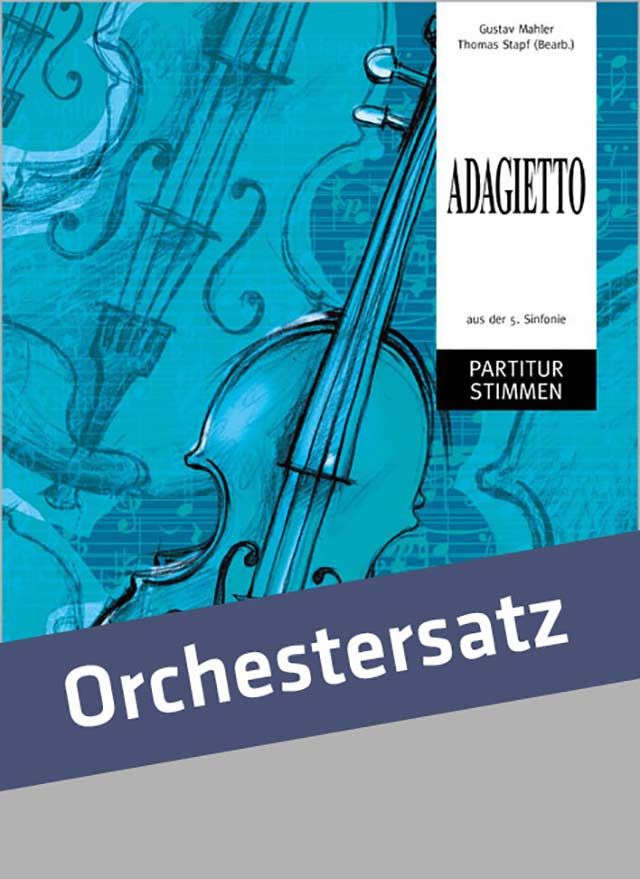
Gustav Mahler
Adagietto
aus der 5. Sinfonie
PDF
voir
Gustav Mahler
Adagietto
aus der 5. Sinfonie
- Formation Orchestre
- Compositeur Gustav Mahler
- Éditeur Thomas Stapf
-
Niveau de difficulté
- Édition Conducteur et parties
- Maison d’Édition Musikverlag Andrea Wiegand
- N ° de commande ETM1763
 disponible
sera expédié dans 1-2 jours ouvrables
TVA incluse,
Hors frais de port
Non disponible dans tous les pays. Apprendre encore plus
Description:
Gustav Mahler wrote his 5th symphony between 1901 and 1904 (premièred in Cologne in 1904) and it is one of his most performed symphonies today. It is in particular the work's Adagietto - originally composed for just strings and harp - that became known to a wider public through Luchino Visconti using it in his film Death in Venice (1971), thereby contributing to the symphony's popularity in general.
A string setting is essentially the basis for this arrangement but the piece can even be played by the soloists of a string quartet if need be or a string quintet. All the parts only require the first position; moreover, the viola can be replaced or supported by a Violin III. The parts are marked with bowing.
Additionally, both a full complement of woodwind (flute, oboe, clarinet, bassoon) and brass instruments (trumpet, horn, trombone) can also join in ad libitum. Timpani, percussion, xylophone, harp and piano put the finishing touches to the symphonic soundscape.
The score is written in C while the parts in the parts book are transposed accordingly.
A string setting is essentially the basis for this arrangement but the piece can even be played by the soloists of a string quartet if need be or a string quintet. All the parts only require the first position; moreover, the viola can be replaced or supported by a Violin III. The parts are marked with bowing.
Additionally, both a full complement of woodwind (flute, oboe, clarinet, bassoon) and brass instruments (trumpet, horn, trombone) can also join in ad libitum. Timpani, percussion, xylophone, harp and piano put the finishing touches to the symphonic soundscape.
The score is written in C while the parts in the parts book are transposed accordingly.
Les clients ont évalué ce produit:
Informations du Fabricant:
Musikverlag Andrea Wiegand
Schreinerstr. 8
85077
Manching
Deutschland
D'autres clients ont également acheté:
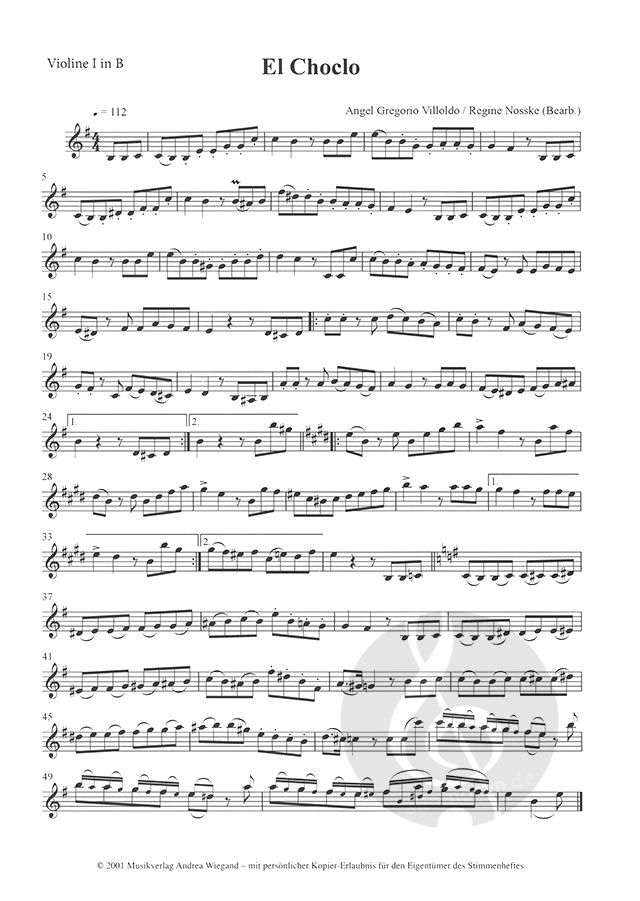
Ángel Gregorio Villoldo
- Quatuor à Cordes
- Set de parties supplémentaires
- Regine Nosske
-
disponible
sera expédié dans 1-2 jours ouvrables

Ángel Gregorio Villoldo
- Quatuor à Cordes
- Conducteur et parties et Réduction piano
- Regine Nosske
-
disponible
sera expédié dans 1-2 jours ouvrables
- Ensemble Jazz
- Conducteur et parties
- Michael Sweeney
-
disponible
sera expédié dans 1-2 jours ouvrables
Peter Iljitsch Tschaikowsky
- Orchestre
- Conducteur et parties
- Thomas Stapf
-
disponible
sera expédié dans 1-2 jours ouvrables
Irving Mills, Cab Calloway
- Orchestre
- Conducteur et parties
- Ralph Ford
-
disponible
sera expédié dans 1-2 jours ouvrables - Aussi disponible en téléchargement !
Johann Pachelbel
für Streicher und Bläser mit Schlagwerk und Harfe (Klavier) - Partitur und Stimmenheft
- Orchestre
- Conducteur et parties
- Thomas Stapf
-
disponible
sera expédié dans 1-2 jours ouvrables
- Orchestre
- Conducteur et parties
- Gerhard Buchner
-
disponible
sera expédié dans 1-2 jours ouvrables
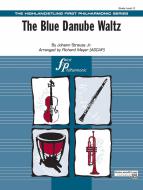
Johann Strauss (Sohn)
- Orchestre
- Conducteur et parties
- Richard Meyer
-
disponible
sera expédié dans 1-2 jours ouvrables - Aussi disponible en téléchargement !
- Orchestre
- Set de parties
- Thomas Stapf
-
sera expédié dans 2-4 jours ouvrables
- Orchestre
- Conducteur et parties
- Thomas Stapf
-
disponible
sera expédié dans 1-2 jours ouvrables
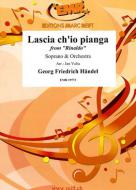
- Orchestre
- Conducteur et parties
- Jan Valta
-
sera expédié dans 1-2 semaines
- Aussi disponible en téléchargement !

Edvard Grieg
- Orchestre
- Conducteur et parties à télécharger
- Michael Story
-
disponible immédiatement
Télécharger immédiatement après la commande
- Orchestre
- Conducteur et parties à télécharger
- Patrick Roszell
-
disponible immédiatement
Télécharger immédiatement après la commande
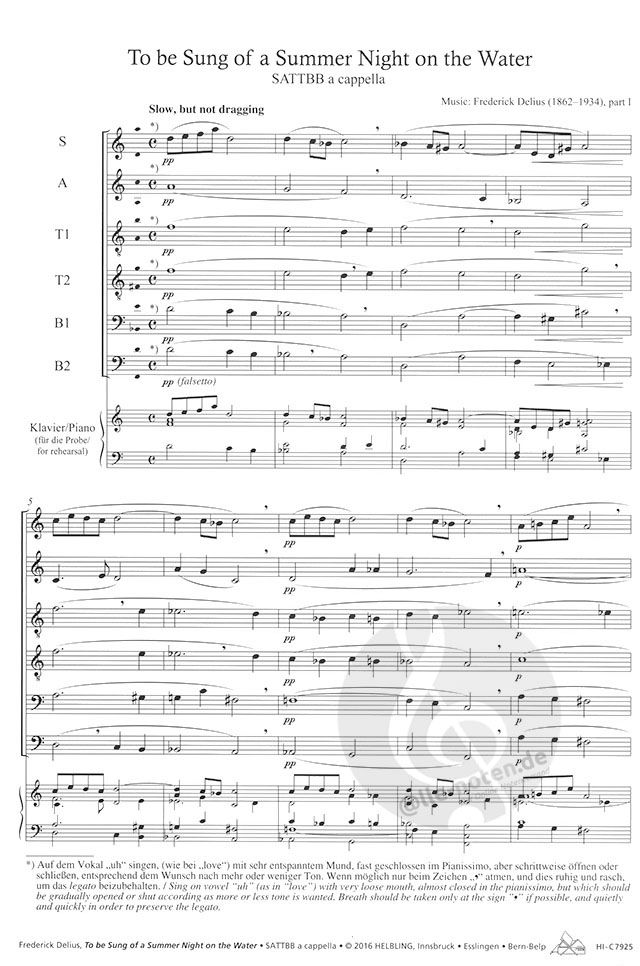
Frederick Delius
- Chœur mixte (SATTBB)
- Partition de chœur
-
sera expédié dans 4-8 jours ouvrables
Frederick Delius
- Quatuor de flûtes traversières
- Conducteur et parties
- Layton Ring
-
disponible
sera expédié dans 1-2 jours ouvrables