
Antonín Dvořák
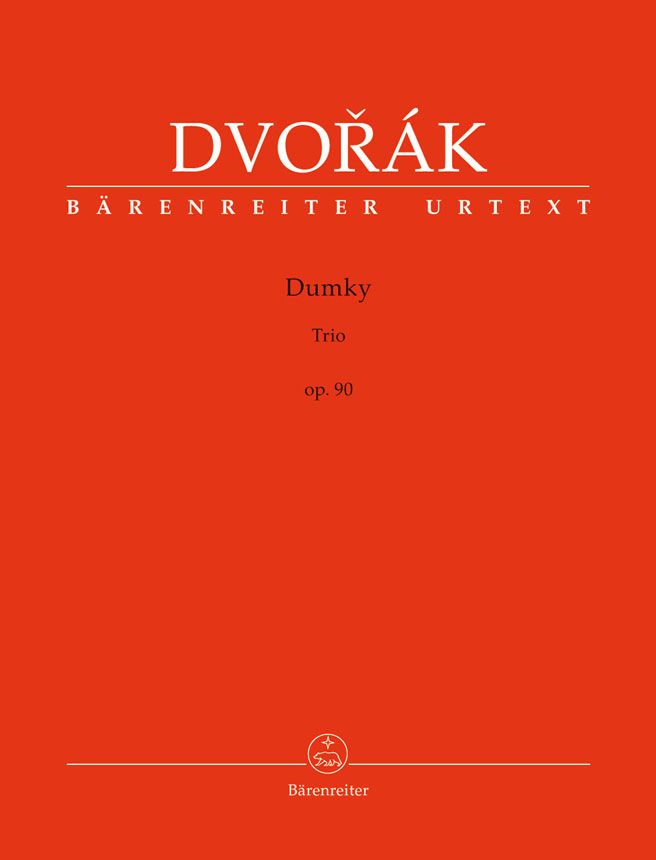
Dumky op. 90
Trio

PDF
voir
Antonín Dvořák
Dumky op. 90
Trio
- Formation Piano, Violon et Violoncelle
- Compositeur Antonín Dvořák
- Série Bärenreiter Urtext
- Éditeur Christoph Flamm
-
Niveau de difficulté
- Édition Partition et parties (Urtext)
- Maison d’Édition Bärenreiter Verlag
- N ° de commande BA9567
 disponible
sera expédié dans 1-2 jours ouvrables
TVA incluse,
Hors frais de port
Non disponible dans tous les pays. Apprendre encore plus
Description:
> Urtext edition reflecting the latest musicological research
> Detailed preface (Ger/Cz/Eng) and Critical Commentary (Eng) by the editor
> Contains previously unknown music (draft version of dumka no. 3)
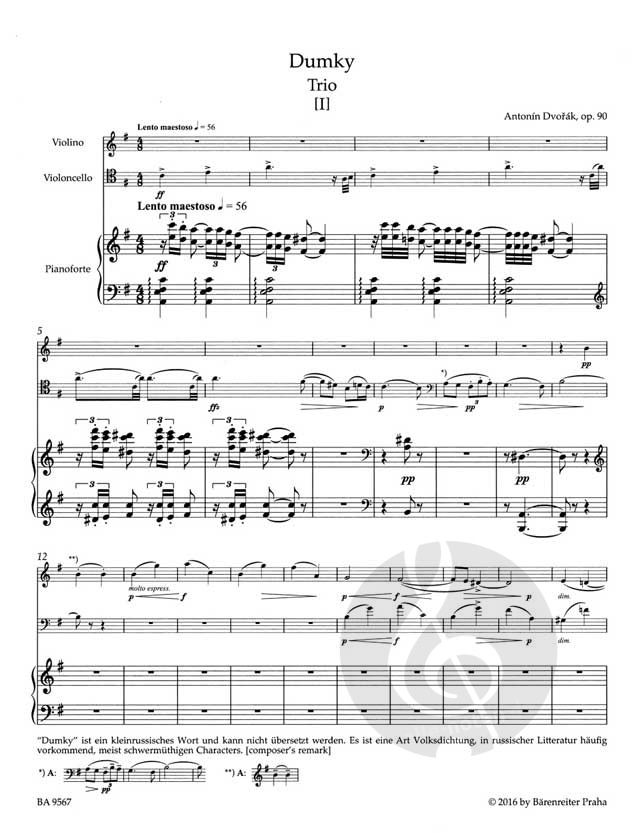
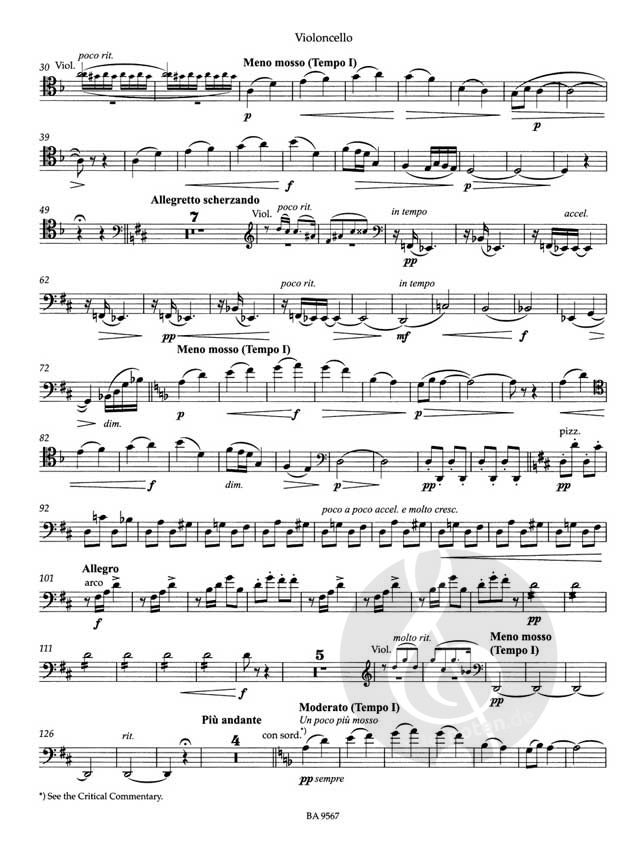
The 'dumka' is a Slavic folk song or dance of a melancholy character. Dvorák's magnum opus in the piano trio genre takes its name from its 'dumka' movements, which he composed in Prague in 1890-91. After long hesitation Dvorák also prepared a piano reduction while he was in the United States in the summer of 1893. The previous year he had played the work on a forty-concert farewell tour of Bohemia with Ferdinand Lachner and Hans Wihan.
The editor of our new edition, Christoph Flamm, took the Simrock print as his starting point. However he also carefully distinguished between the various reissues and consulted Dvorák's sketches as well as his piano reduction. A Critical Commentary provides detailed information on the work's sources, tempo markings and formal divisions of the movements.
> Detailed preface (Ger/Cz/Eng) and Critical Commentary (Eng) by the editor
> Contains previously unknown music (draft version of dumka no. 3)
The 'dumka' is a Slavic folk song or dance of a melancholy character. Dvorák's magnum opus in the piano trio genre takes its name from its 'dumka' movements, which he composed in Prague in 1890-91. After long hesitation Dvorák also prepared a piano reduction while he was in the United States in the summer of 1893. The previous year he had played the work on a forty-concert farewell tour of Bohemia with Ferdinand Lachner and Hans Wihan.
The editor of our new edition, Christoph Flamm, took the Simrock print as his starting point. However he also carefully distinguished between the various reissues and consulted Dvorák's sketches as well as his piano reduction. A Critical Commentary provides detailed information on the work's sources, tempo markings and formal divisions of the movements.
-
Lento maestoso Preface
-
Poco adagio
-
Andante
-
Andante moderato (quasi tempo di marchia)
-
Allegro
-
Lento maestoso
-
Appendix: Allegro moderato e grazioso
Produits liés:
Les clients ont évalué ce produit:
Informations du Fabricant:
Bärenreiter-Verlag Karl Vötterle GmbH & Co. KG
Heinrich-Schütz-Allee 35-37
34131
Kassel
Deutschland
D'autres clients ont également acheté:
pour basson solo violoncelle solo
- Basson
- Partition
-
disponible
sera expédié dans 1-2 jours ouvrables
Johannes Brahms
- Violon, Alto, Violoncelle et Piano
- Set de parties (Urtext)
-
disponible
sera expédié dans 1-2 jours ouvrables

Johann Sebastian Bach
Cantate pour le premier dimanche de l'Avent
- 3 Solistes, Choeur mixte (SATB) et Piano
- Réduction piano (Urtext)
- Günter Raphael
-
sera expédié dans 2-4 jours ouvrables
- Aussi disponible en téléchargement !
- Voix élevées et Basse continue
- Partition
- Gottfried Neubert
-
disponible
sera expédié dans 1-2 jours ouvrables
Franz Schubert
- Violon, Violoncelle et Piano
- Partition
-
disponible
sera expédié dans 1-2 jours ouvrables
Ludwig van Beethoven
- Violon, Violoncelle et Piano
- Partition
-
disponible
sera expédié dans 1-2 jours ouvrables
Anne Terzibaschitsch
- Piano à 4 mains
- Partition
-
disponible
sera expédié dans 1-2 jours ouvrables
Antonín Dvořák
- Quatuor à cordes (2 Violons, Alto et Violoncelle)
- Set de parties (Urtext)
- Hartmut Schick
-
sera expédié dans 2-4 jours ouvrables
- Aussi disponible en téléchargement !

- Piano à 4 mains
- Partition
-
disponible
sera expédié dans 1-2 jours ouvrables
- Quatuor à cordes (2 Violons, Alto et Violoncelle)
- Set de parties (Urtext)
-
disponible
sera expédié dans 1-2 jours ouvrables
- Piano à 4 mains
- Partition
-
disponible
sera expédié dans 1-2 jours ouvrables
Joseph Haydn
- Violon, Violoncelle et Piano
- Partition piano et partie(s)
-
disponible
sera expédié dans 1-2 jours ouvrables
Wolfgang Amadeus Mozart
- Clarinette, 2 Violons, Alto et Violoncelle
- Set de parties (Urtext)
-
disponible
sera expédié dans 1-2 jours ouvrables
Joseph Haydn
- Violon, Violoncelle et Piano
- Partition piano et partie(s)
-
disponible
sera expédié dans 1-2 jours ouvrables




- Violon, Violoncelle et Piano
- Partition
-
disponible
sera expédié dans 1-2 jours ouvrables - Aussi disponible en téléchargement !