John Cage
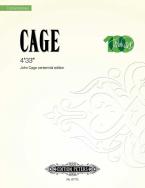
4'33' (Tacet)
John Cage
4'33' (Tacet)
- Formation Instrument
- Compositeur John Cage
- Édition Partition
- Maison d’Édition Edition Peters
- N ° de commande EP6777
sera expédié dans 1-2 jours ouvrables
TVA incluse,
Hors frais de port
- Carte de crédit
- La facture
- PayPal
- Sepa
Non disponible dans tous les pays. Apprendre encore plus

Description:
- Parution: 15.08.2002
- Poids: 50 g
- Genre: Musique classique, Musique classique moderne
- ISMN: 9790300744834
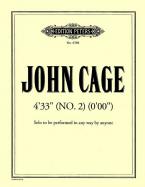
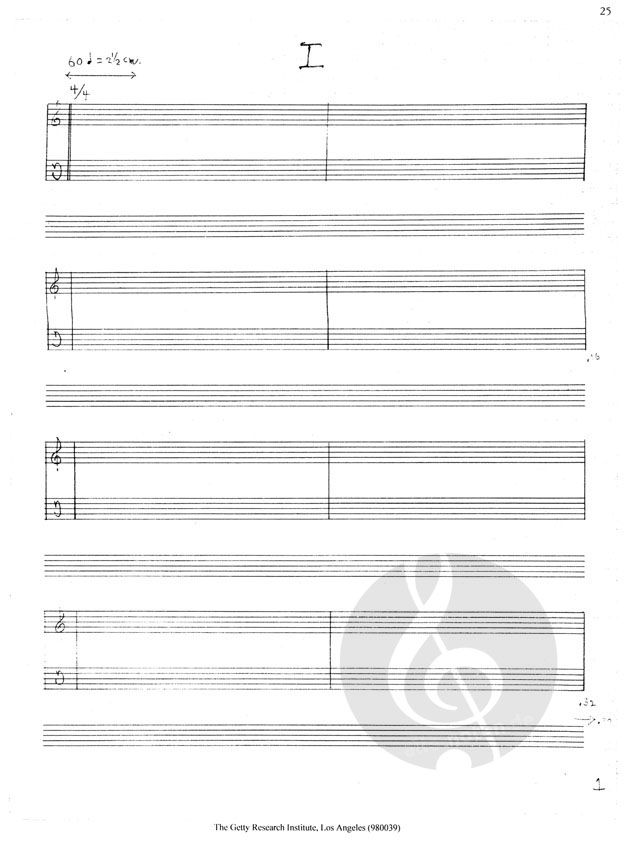
Several versions of 4'33' exist: The Kremen manuscript (1953): graphic, space-time notation, dedicated to Irwin Kremen The movements of the piece are rendered as space between long vertical lines; a tempo indication is provided (60), and at the end of each movement the time is indicated in minutes and seconds EP No. 6777a.
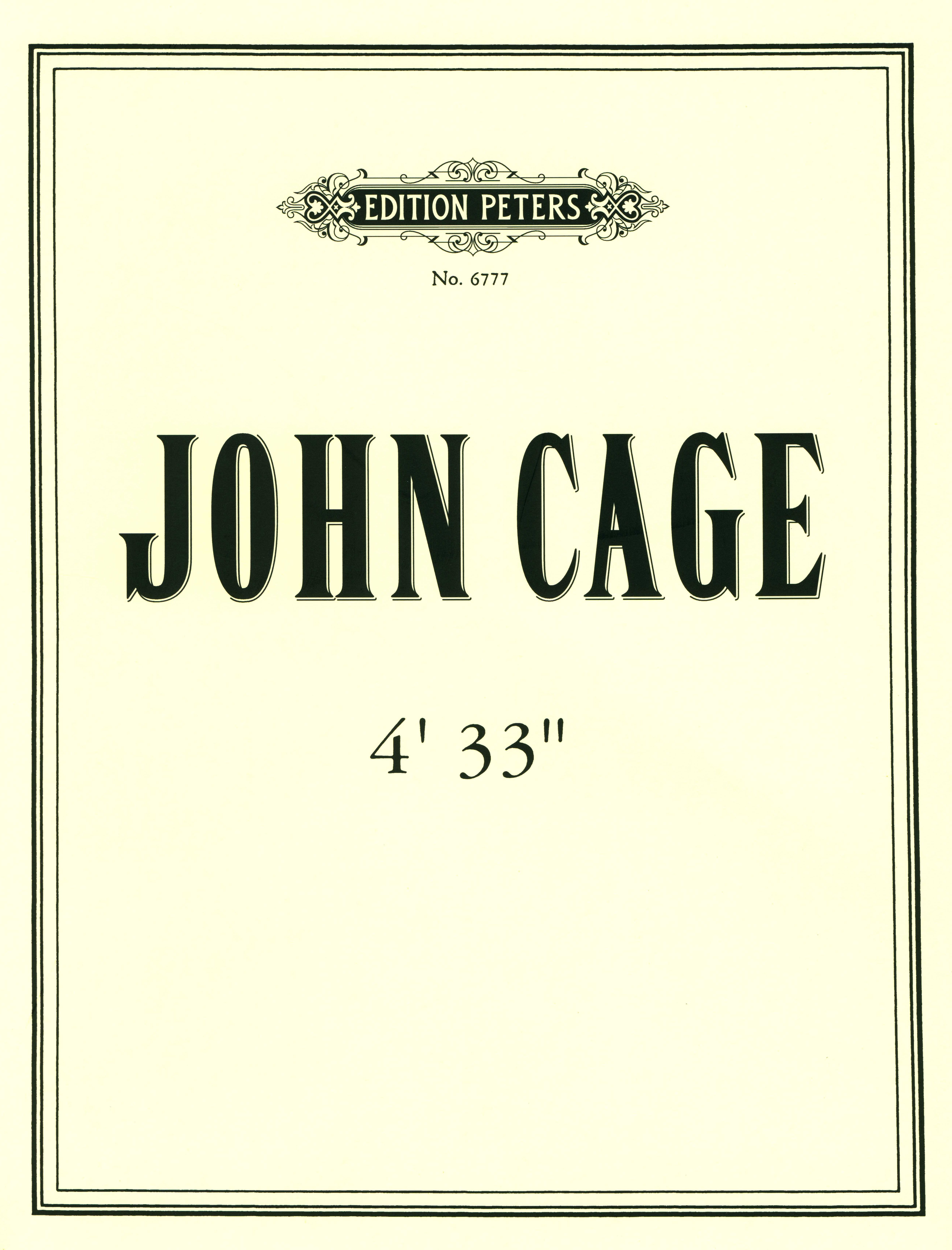
The so-called First Tacet Edition: a typewritten score, lists the three movements using Roman numbers, with the word 'TACET' underneath each. A note by Cage describes the first performance and mentions that 'the work may be performed by (any) instrumentalist or combination of instrumentalists and last any length of time.' Edition Peters No. 6777 (out of print).
The so-called Second Tacet Edition: same as the First, except that it is printed in Cage's calligraphy, and the explanatory note mentions the Kremen manuscript. Edition Peters No. 6777 (i.e. it carries the same catalogue number as the first Tacet Edition)
The premiere of the three-movement 4'33 was given by David Tudor on August 29, 1952, at Woodstock, New York as part of a recital of contemporary piano music. The audience saw him sit at the piano and, to mark the beginning of the piece, close the keyboard lid. Some time later he opened it briefly, to mark the end of the first movement. This process was repeated for the second and third movements. The piece had passed without a note being played-in fact without Tudor (or anyone else) having made any deliberate sound as part of the piece. Tudor timed the three movements with a stopwatch while turning the pages of the score.
'They missed the point. There's no such thing as silence. What they thought was silence, because they didn't know how to listen, was full of accidental sounds. You could hear the wind stirring outside during the first movement. During the second, raindrops began patterning the roof, and during the third the people themselves made all kinds of interesting sounds as they talked or walked out.' John Cage speaking about the premiere of 4'33'
The so-called First Tacet Edition: a typewritten score, lists the three movements using Roman numbers, with the word 'TACET' underneath each. A note by Cage describes the first performance and mentions that 'the work may be performed by (any) instrumentalist or combination of instrumentalists and last any length of time.' Edition Peters No. 6777 (out of print).
The so-called Second Tacet Edition: same as the First, except that it is printed in Cage's calligraphy, and the explanatory note mentions the Kremen manuscript. Edition Peters No. 6777 (i.e. it carries the same catalogue number as the first Tacet Edition)
The premiere of the three-movement 4'33 was given by David Tudor on August 29, 1952, at Woodstock, New York as part of a recital of contemporary piano music. The audience saw him sit at the piano and, to mark the beginning of the piece, close the keyboard lid. Some time later he opened it briefly, to mark the end of the first movement. This process was repeated for the second and third movements. The piece had passed without a note being played-in fact without Tudor (or anyone else) having made any deliberate sound as part of the piece. Tudor timed the three movements with a stopwatch while turning the pages of the score.
'They missed the point. There's no such thing as silence. What they thought was silence, because they didn't know how to listen, was full of accidental sounds. You could hear the wind stirring outside during the first movement. During the second, raindrops began patterning the roof, and during the third the people themselves made all kinds of interesting sounds as they talked or walked out.' John Cage speaking about the premiere of 4'33'
Mots clés:
Partitions musique classique
Les clients ont évalué ce produit:
Aucune évaluation n'est disponible.
Informations du Fabricant:
Faber Peters Music Distribution
Talstr. 10
04103
Leipzig
Deutschland
Produits liés:
- Ensemble
- Partition
- Edition Peters
-
disponible
sera expédié dans 1-2 jours ouvrables
- Ensemble
- Partition
- Edition Peters
-
disponible
sera expédié dans 1-2 jours ouvrables
D'autres clients ont également acheté:

- Chœur mixte (SATB) et Piano
- Réduction piano
-
disponible
sera expédié dans 1-2 jours ouvrables - Aussi disponible en téléchargement !
- Ensemble
- Partition
-
disponible
sera expédié dans 1-2 jours ouvrables
- Ensemble
- Partition
-
disponible
sera expédié dans 1-2 jours ouvrables

- Orgue
- Partition
- Gunther Martin Göttsche
-
disponible
sera expédié dans 1-2 jours ouvrables
Johann Sebastian Bach
48 Préludes et Fugues dans toutes les tonalités majeures et mineures BWV 870-893
- Piano
- Partition (Urtext)
-
disponible
sera expédié dans 1-2 jours ouvrables - Aussi disponible en téléchargement !
- General music theory
- Livre
-
disponible
sera expédié dans 1-2 jours ouvrables
- Piano
- Partition
-
disponible
sera expédié dans 1-2 jours ouvrables
- Piano
- Partition
-
sera expédié dans 2-4 semaines
John Cage
- Voix
- Partition
-
sera expédié dans 3-6 jours ouvrables
John Cage
- Quatuor à Cordes
- Set de parties
-
sera expédié dans 3-6 jours ouvrables
John Cage
- Voix
- Partition
-
sera expédié dans 2-4 semaines
- Chœur mixte
- Set de parties
-
sera expédié dans 3-6 jours ouvrables
- Piano
- Partition
-
disponible
sera expédié dans 1-2 jours ouvrables
- Clarinette alto, Clarinette, Cor anglais, Contrebasse, Flûte traversière, Voix, Hautbois, Orgue, Percussion et Piano
- Partition
-
sera expédié dans 2-4 semaines

- Piano
- Partition
-
disponible
sera expédié dans 1-2 jours ouvrables