
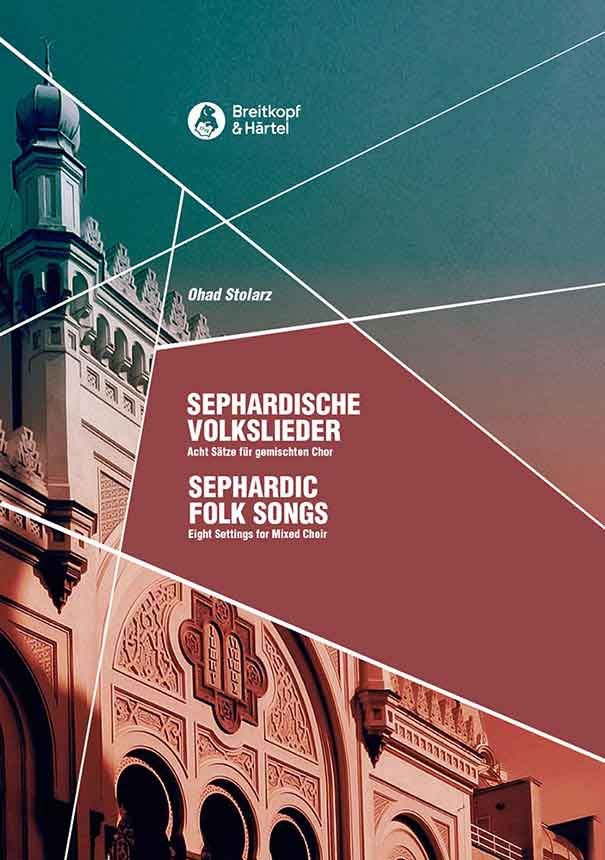
Sephardic Folk Songs
8 Settings for Mixed Choir
PDF
voir
Sephardic Folk Songs
8 Settings for Mixed Choir
- Formation Chœur mixte
- Éditeur Ohad Stolarz
-
Niveau de difficulté
- Édition Partition de chœur
- Maison d’Édition Breitkopf & Härtel
- N ° de commande CHB5364
 disponible
sera expédié dans 1-2 jours ouvrables
TVA incluse,
Hors frais de port
- Échelle de quantité:
- àpd 15 unités 16,65 €
- àpd 25 unités 15,73 €
- àpd 40 unités 14,80 €
- àpd 60 unités 13,88 €
Non disponible dans tous les pays. Apprendre encore plus

Description:
The Sephardic culture originates from the Jewish population of Spain that was banished at the end of 15th century and afterwards spread to the whole of the Mediterranean area, the Balkan and North Africa. Its unique Spanish dialect Ladino was preserved, finding musical expression in ballads, lyrical and paraliturgical songs for the most part.
The choir conductor and composer Ohad Stolarz took eight of these Sephardic Folk Songs and arranged them as a cappella settings for four-part mixed choir. These arrangements may be performed both as a cycle and individually, being also suitable for non-professional choirs due to their lack of difficulty. The musically and harmonically colorful, partly also exotic pieces therefore present an enrichment for the program of every interculturally interested choir.
The informative preface and the translations of the lyrics in German and English enable the content-related engagement with Sephardic culture, too.
The choir conductor and composer Ohad Stolarz took eight of these Sephardic Folk Songs and arranged them as a cappella settings for four-part mixed choir. These arrangements may be performed both as a cycle and individually, being also suitable for non-professional choirs due to their lack of difficulty. The musically and harmonically colorful, partly also exotic pieces therefore present an enrichment for the program of every interculturally interested choir.
The informative preface and the translations of the lyrics in German and English enable the content-related engagement with Sephardic culture, too.
Les clients ont évalué ce produit:
Informations du Fabricant:
Breitkopf & Härtel KG
Walkmühlstraße 52
65195
Wiesbaden
Deutschland
D'autres clients ont également acheté:
- Chœur mixte (SAB)
- Partition de chœur
-
disponible
sera expédié dans 1-2 jours ouvrables
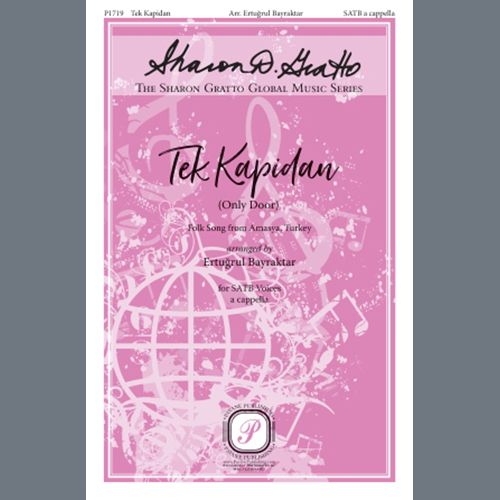
Only Door - Folk Song from Amasya, Turkey
- Chœur mixte (SATB)
- Partition de chœur
- Ertugrul Bayraktar
-
sera expédié dans 2-4 semaines
- Aussi disponible en téléchargement !
Steven Sametz
A Bosnian Folk Song For Unaccompanied Mixed Chorus
- Chœur mixte (SATB)
- Partition
-
sera expédié dans 1-2 semaines
All Night I Am Awake Come, Sweetheart (A Cappella)
- Chœur mixte (SATB)
- Partition de chœur
- Alojz Srebotnjak
-
sera expédié dans 2-4 semaines
Mátyás Seiber
- Chœur mixte (SATB)
- Partition de chœur
-
sera expédié dans 2-4 semaines
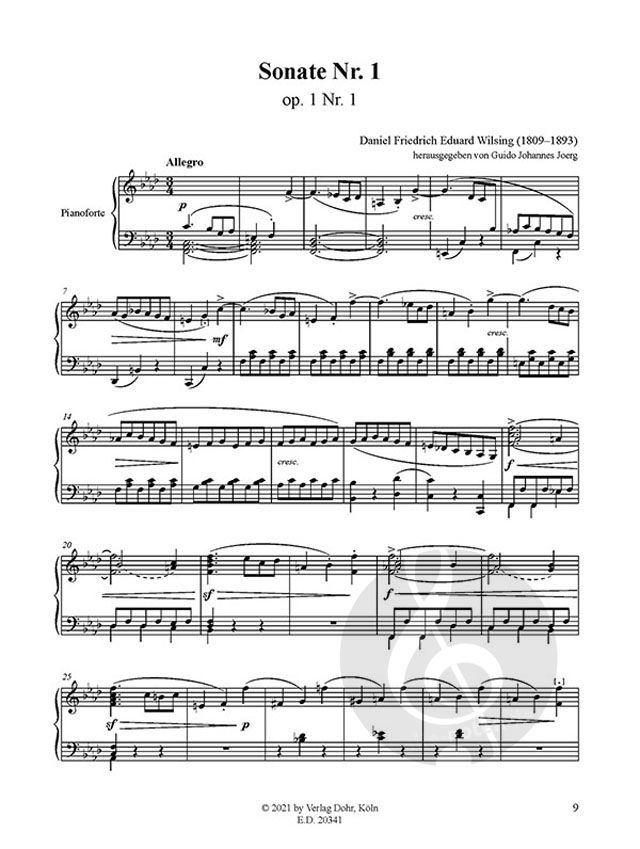
Daniel Friedrich Eduard Wilsing
- Piano
- Partition
-
sera expédié dans 2-5 jours ouvrables

Gespräche und Essays
- Littérature
- Livre
-
disponible
sera expédié dans 1-2 jours ouvrables
- Piano
- Partition
-
disponible
sera expédié dans 1-2 jours ouvrables
Fanny Hensel
- Chœur mixte (SABar)
- Partition
-
sera expédié dans 4-8 jours ouvrables
- Violoncelle et Piano
- Partition piano et partie(s)
-
disponible
sera expédié dans 1-2 jours ouvrables
800 Werke aus sechs Jahrhunderten
- Littérature
- Livre
-
sera expédié dans 2-4 jours ouvrables
- Violoncelle et Piano
- Partition piano et partie(s)
-
disponible
sera expédié dans 1-2 jours ouvrables
Fanny Hensel
- Choeur de femmes (SSA)
- Partition
-
disponible
sera expédié dans 1-2 jours ouvrables
Helen Edordu
- Ensemble Flexible
- Conducteur et parties
- Sarah Watts
-
sera expédié dans 3-6 jours ouvrables


A Selection of Folk and Traditional Songs
- Piano, Chant et Guitare
- Partition
-
sera expédié dans 3-6 jours ouvrables