
Christoph Graupner
Concerto in A major (GWV 337)
Score
PDF
voir
Christoph Graupner
Concerto in A major (GWV 337)
Score
- Formation Violon, Orchestre à cordes et Basse continue
- Compositeur Christoph Graupner
- Éditeur Ursula Kramer Florian Heyerick
-
Niveau de difficulté
- Édition Partition
- Maison d’Édition Golden River Music
- N ° de commande GRM-CB-GE-337-01
 sera expédié dans 2-4 semaines
TVA incluse,
Hors frais de port
Non disponible dans tous les pays. Apprendre encore plus

Description:
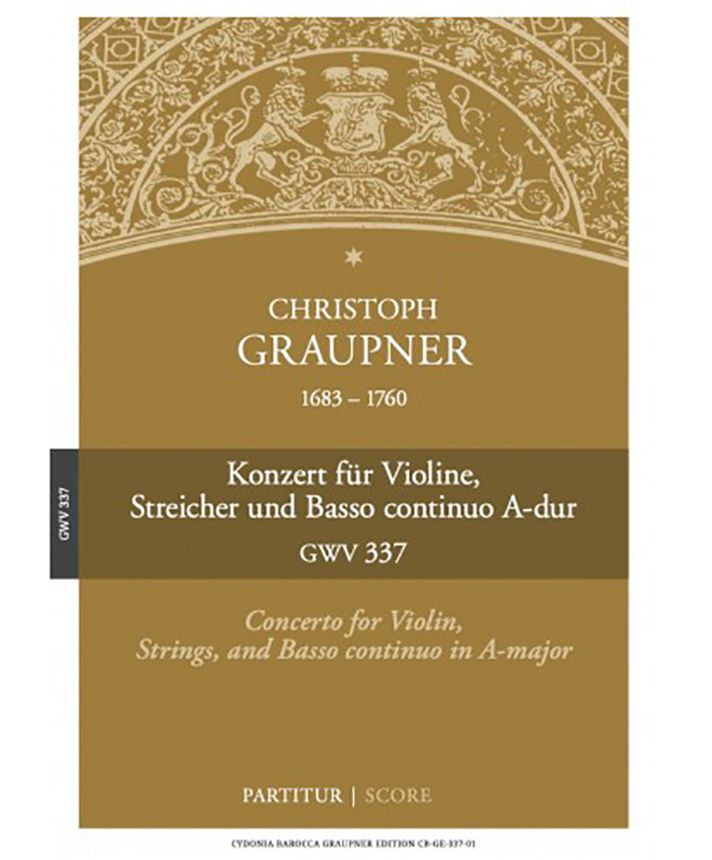
Score , Partitur of Concerto in A major GWV 337 for Violin, Strings and Basso continuo, score 24 p.
Graupner's preference for multiple solo instruments in over half of his concertos reflects his unique interpretation of the Italian formal model, which was also popular in Germany. Unlike Vivaldi, who highlighted a soloist against the orchestral tutti, Graupner emphasized player interaction, treating a solo instrument as "primus inter pares" (first among equals). This approach is evident in his violin concerto GWV 337, where the solo part gradually separates from the Ripieno but remains supported throughout. In the sophisticated slow middle movement, Graupner uses pizzicato in the orchestra to allow the muted solo instrument to stand out. The final movement, with its distinct musical vitality and recurring main theme, is most reminiscent of Vivaldi and the ritornello form he established.
Graupner's preference for multiple solo instruments in over half of his concertos reflects his unique interpretation of the Italian formal model, which was also popular in Germany. Unlike Vivaldi, who highlighted a soloist against the orchestral tutti, Graupner emphasized player interaction, treating a solo instrument as "primus inter pares" (first among equals). This approach is evident in his violin concerto GWV 337, where the solo part gradually separates from the Ripieno but remains supported throughout. In the sophisticated slow middle movement, Graupner uses pizzicato in the orchestra to allow the muted solo instrument to stand out. The final movement, with its distinct musical vitality and recurring main theme, is most reminiscent of Vivaldi and the ritornello form he established.