
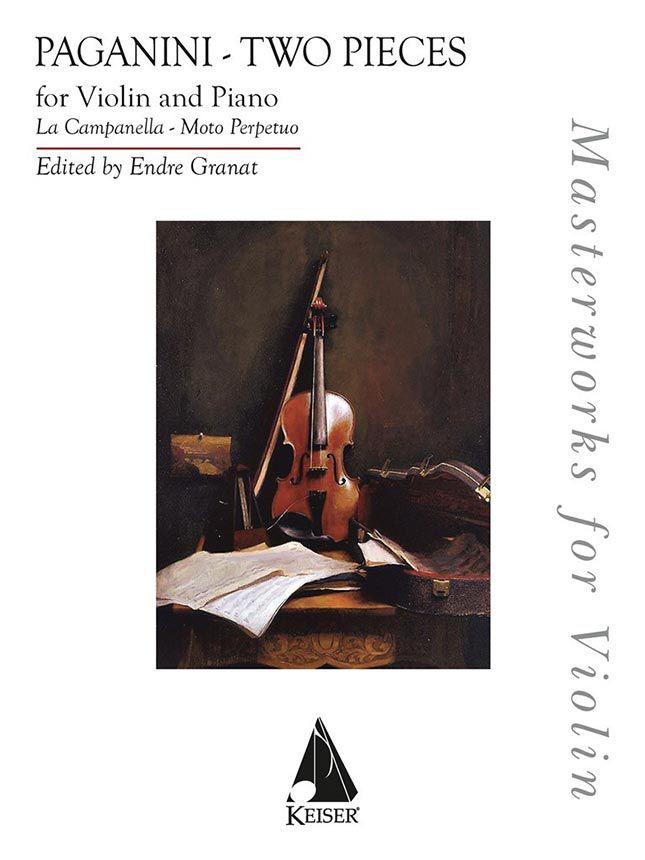
Nicol Paganini
2 Pieces: La Campanella and Moto Perpetu
Masterworks for Violin Series for Violin and Piano
Nicol Paganini
2 Pieces: La Campanella and Moto Perpetu
Masterworks for Violin Series for Violin and Piano
- Formation Violon et Piano
- Compositeur Nicol Paganini
- Éditeur Endre Granat
- Édition Partition piano et partie(s)
- Maison d’Édition Lauren Keiser Music Publishing
- N ° de commande 00370318
 sera expédié dans 3-6 jours ouvrables
TVA incluse,
Hors frais de port
Non disponible dans tous les pays. Apprendre encore plus

Description:
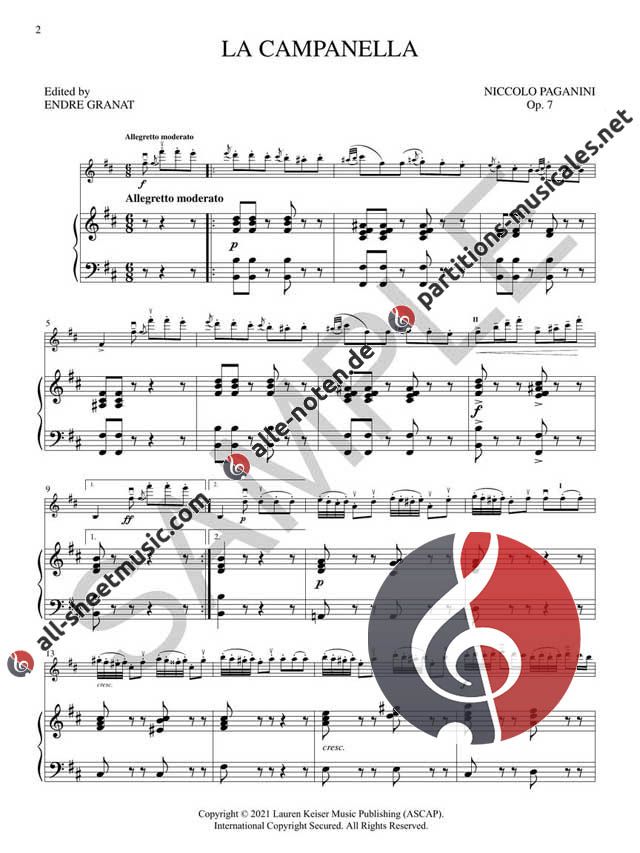
Contains La Campanella, Op.7 and Moto Perpetuo, Op.11.
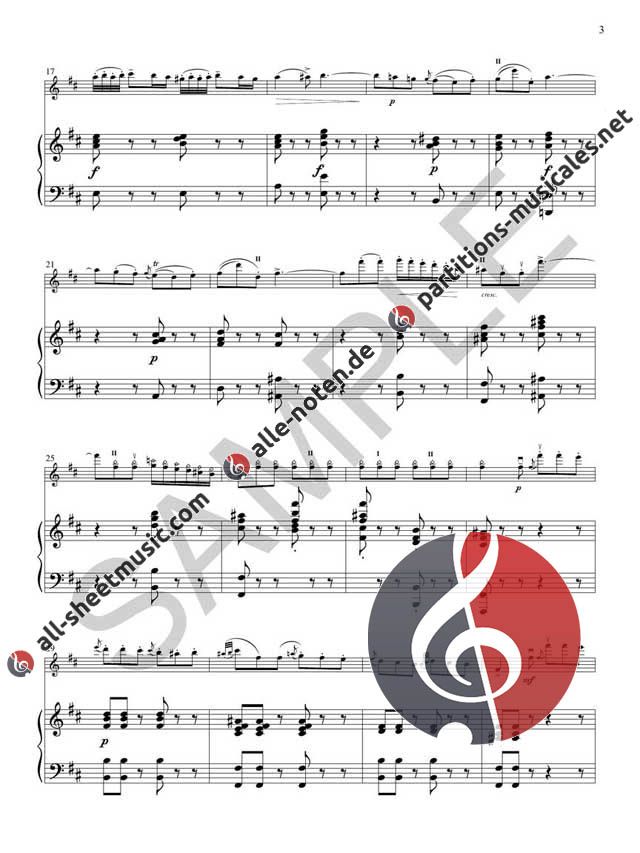
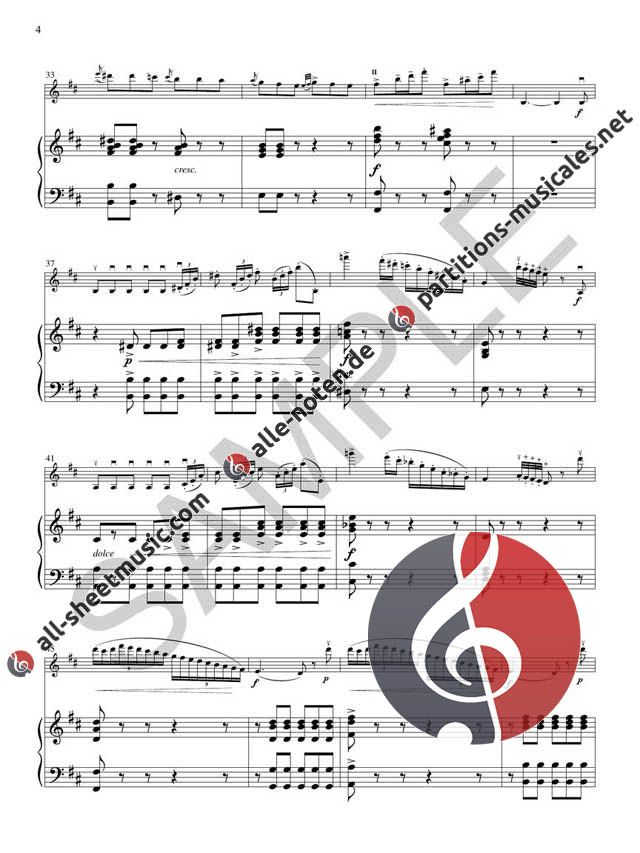
Niccolò Paganini gave the premiere performance of his Second Violin Concerto at La Scala in Milan, 1827. The success of the performance was such that the last movement of the concerto was repeated. The subtitle of this movement is 'La Campanella' (The little bell) because of the sound the harmonics in this work produce. Paganini known for his pyrotechnics uses double harmonics and left hand pizzicato lavishly in this movement.
Moto Perpetuo is one of Paganini's most popular works. Dozens of transcriptions exist for a variety of instruments, from marimba to double bass, as well as for orchestra, where all first violins play the solo part. The 3,032 sixteenth notes in this four-minute composition require formidable skill and endurance from the performer.'
Niccolò Paganini gave the premiere performance of his Second Violin Concerto at La Scala in Milan, 1827. The success of the performance was such that the last movement of the concerto was repeated. The subtitle of this movement is 'La Campanella' (The little bell) because of the sound the harmonics in this work produce. Paganini known for his pyrotechnics uses double harmonics and left hand pizzicato lavishly in this movement.
Moto Perpetuo is one of Paganini's most popular works. Dozens of transcriptions exist for a variety of instruments, from marimba to double bass, as well as for orchestra, where all first violins play the solo part. The 3,032 sixteenth notes in this four-minute composition require formidable skill and endurance from the performer.'