
Kerry Turner
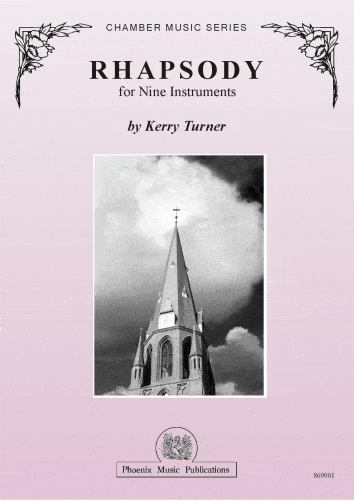
Rhapsody
for 9 Instruments (Flute, Oboe, Clarinet, Bassoon, Horn, Violin, Viola, Cello, Contrabass)
Démo
écouter
Kerry Turner
Rhapsody
for 9 Instruments (Flute, Oboe, Clarinet, Bassoon, Horn, Violin, Viola, Cello, Contrabass)
- Formation Flûte traversière, Hautbois, Clarinette, Basson, Cor, Violon, Alto, Violoncelle et Contrebasse
- Compositeur Kerry Turner
- Édition Conducteur et parties
- Maison d’Édition Phoenix Music NL
- N ° de commande PHOENIXNL869001
 sera expédié dans 4-8 jours ouvrables
TVA incluse,
Hors frais de port
Non disponible dans tous les pays. Apprendre encore plus

Description:
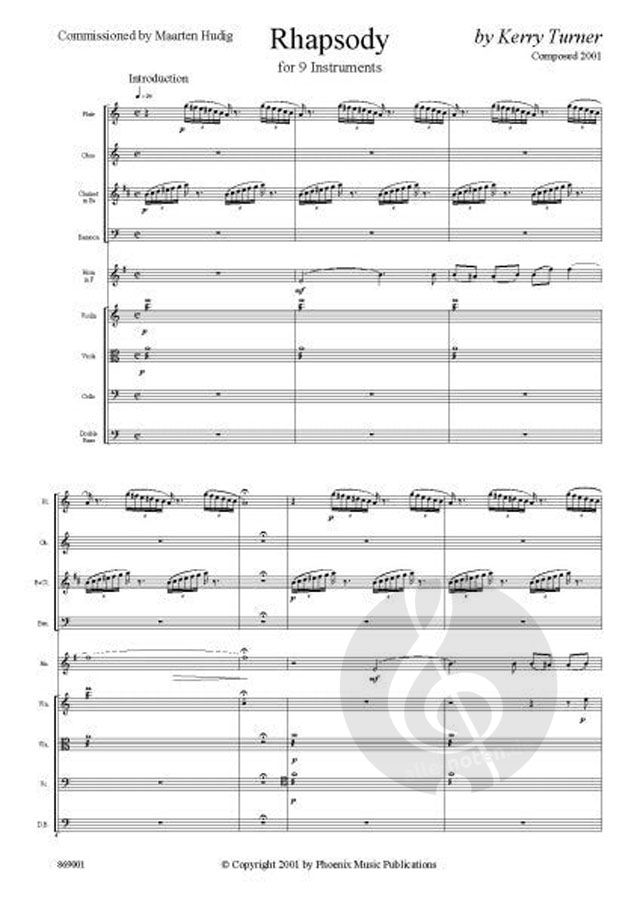
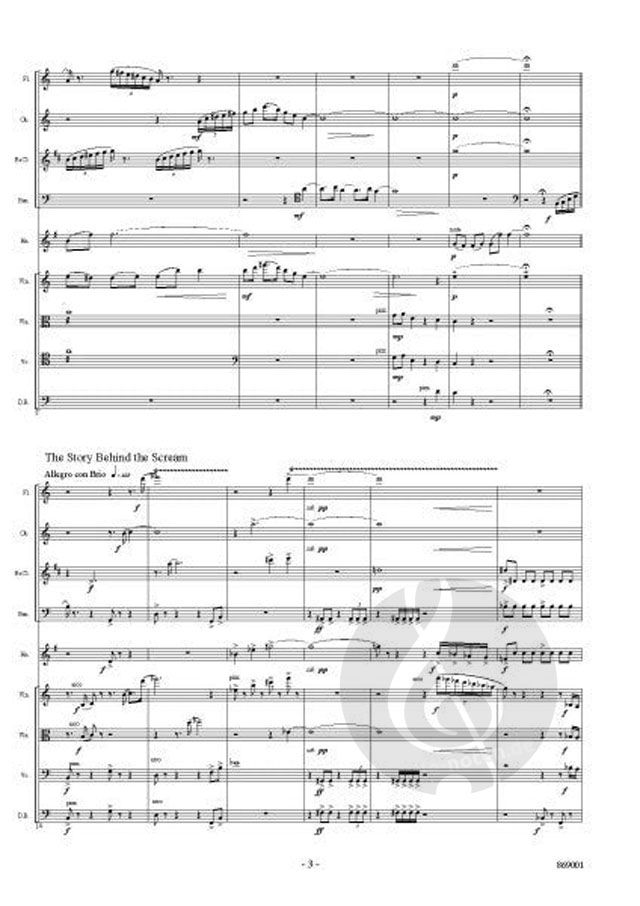
Rhapsody was meant to recreate, with music, four vivid yet fleeting memories in the life of the composer. The scenes which flashed into Mr. Turner’s mind were both full of character and color, indeed each interesting enough on which to base an episode of music.
The episodes are entitled: The Story Behind the Scream, Return to the Scene of a Past Romantic Affair, Crossing a Street in Old Shanghai, and The Steeple of the Belair Church. The piece begins with an introduction which states the principal theme over a dreamy background. This theme reoccurs throughout the entire work, sometimes in counterpoint with the new episodic material, sometimes alone and sometimes in the accompaniment. The four episodes are tied together with three interludes, which bring a source of continuity to the work. The Finale presents a completion of the principal theme and integrates the various melodies and motifs of the episodes.
Rhapsody for Nine Instruments was commissioned by Mr. Maarten Hudig of Rotterdam, The Netherlands. The commission was a retirement gift presented to him by his colleagues. The instrumentation of the commission was outlined by Mr. Hudig himself as it corresponds to the instruments of his chamber ensemble.
The episodes are entitled: The Story Behind the Scream, Return to the Scene of a Past Romantic Affair, Crossing a Street in Old Shanghai, and The Steeple of the Belair Church. The piece begins with an introduction which states the principal theme over a dreamy background. This theme reoccurs throughout the entire work, sometimes in counterpoint with the new episodic material, sometimes alone and sometimes in the accompaniment. The four episodes are tied together with three interludes, which bring a source of continuity to the work. The Finale presents a completion of the principal theme and integrates the various melodies and motifs of the episodes.
Rhapsody for Nine Instruments was commissioned by Mr. Maarten Hudig of Rotterdam, The Netherlands. The commission was a retirement gift presented to him by his colleagues. The instrumentation of the commission was outlined by Mr. Hudig himself as it corresponds to the instruments of his chamber ensemble.