
Arvo Pärt
Mozart-Adagio

PDF
voir
Recommander
recommander l'article
Arvo Pärt
Mozart-Adagio
- Formation Violon, Violoncelle et Piano
- Édition Conducteur et parties
- Compositeur Arvo Pärt
- Maison d'Édition Universal Edition
- N ° de commande UE30456
TVA incluse,
Hors frais de port
 disponible
|
sera expédié dans 1-2 jours ouvrables
Description:
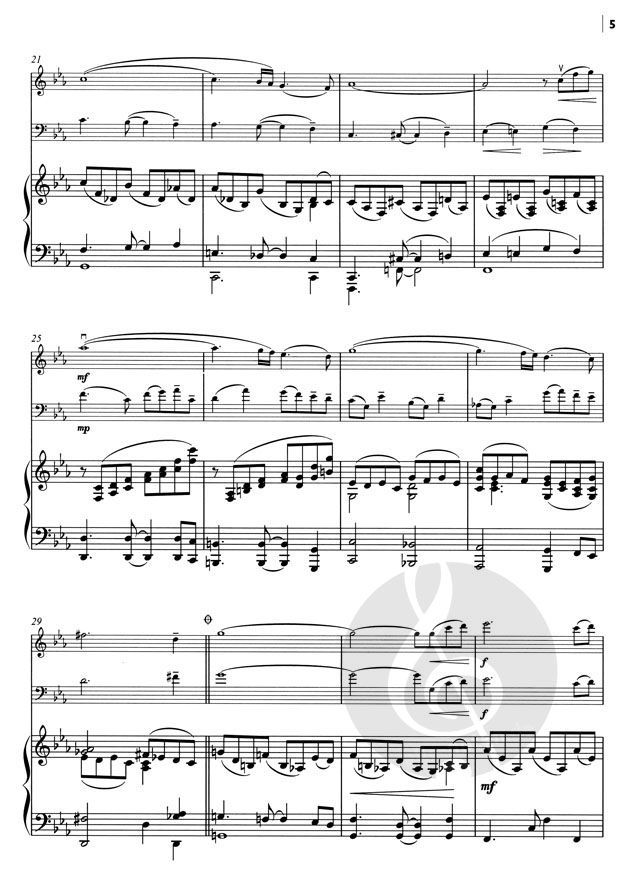
Arvo Pärt's Mozart-Adagio (1992) for violin, cello and piano was composed for the Kalichstein-Laredo-Robinson Trio on commission by the Helsinki Festival, where it was premiered. The piece is in memory of Oleg Kagan, who was a friend of Arvo Pärt's and one of Russia's leading violinists. Kagan had a special affinity with the music of Mozart and the composer memorialises the violinist by transcribing one of the most affecting movements of the youthful composer's piano sonatas, the Adagio from the Sonata in F Major, K. 280.
Arvo Pärt's Mozart-Adagio is neither an arrangement nor a collage. Pärt's approach to the original work is not a playful one (as it was with his Bach-inspired piece Wenn Bach Bienen gezüchtet hätte) - rather, it is cautious and respectful. Aspects of Mozart's composition and Pärt's Tintinnabuli style are in balance so that there emerges a spiritual encounter between the 18th and 20th centuries.
To the original, the composer adds a modest introduction, interlude, and coda, as well as a restrained and ongoing 'commentary'. The introductory and concluding frame consists of the simplest material - cello and violin playing discrete single notes in a 'humble' duet of seconds and thirds. For the 'commentary', the composer takes the interval of Mozart's preoccupation in this movement, the minor second and peppers the texture with this dissonant sonority. In lamenting the loss of a friend, Arvo Pärt seems to take the dissonance that Mozart uses so sparingly and makes this symbol of sorrow permeate, inescapably, the entire piece.
Les clients ont évalué ce produit:
Partitions depuis 1969

Depuis 1969, plus de 500 000 clients nous font confiance. Avec un vaste choix de plus de 1 000 000 partitions, nous sommes l'un des plus grands fournisseurs d'Europe. Grâce à notre grand stock, nous pouvons souvent expédier les partitions sous 24 heures. Quelles que soient les partitions que vous recherchez, vous êtes au bon endroit !
Votre Stefanie Reichert
Responsable du service client
D'autres clients ont également acheté:

- Violon, Alto et Piano
- Partition
-
disponible
|
sera expédié dans 1-2 jours ouvrables

Georg Friedrich Händel
- Orchestre à Cordes
- Conducteur et parties
- Deborah Baker Monday
-
disponible
|
sera expédié dans 1-2 jours ouvrables
- Aussi disponible en téléchargement !

- Orchestre
- Partition de poche (Urtext)
-
sera expédié dans 2-4 jours ouvrables

- Orchestre à Cordes
- Partition
-
disponible
|
sera expédié dans 1-2 jours ouvrables

- Orchestre
- Partition
-
sera expédié dans 2-4 semaines

Giacomo Puccini
- Orchestre à chambre
- Partition
-
disponible
|
sera expédié dans 1-2 jours ouvrables

- Orchestre à chambre
- Partition
- Wolfgang Helbich
-
disponible
|
sera expédié dans 1-2 jours ouvrables

Igor Strawinsky
- Orchestre
- Partition de poche
-
disponible
|
sera expédié dans 1-2 jours ouvrables

- Violon et Piano
- Partition
-
sera expédié dans 3-6 jours ouvrables

Astor Piazzolla
- Violon, Violoncelle et Piano
- Partition
- José Bragato
-
disponible
|
sera expédié dans 1-2 jours ouvrables

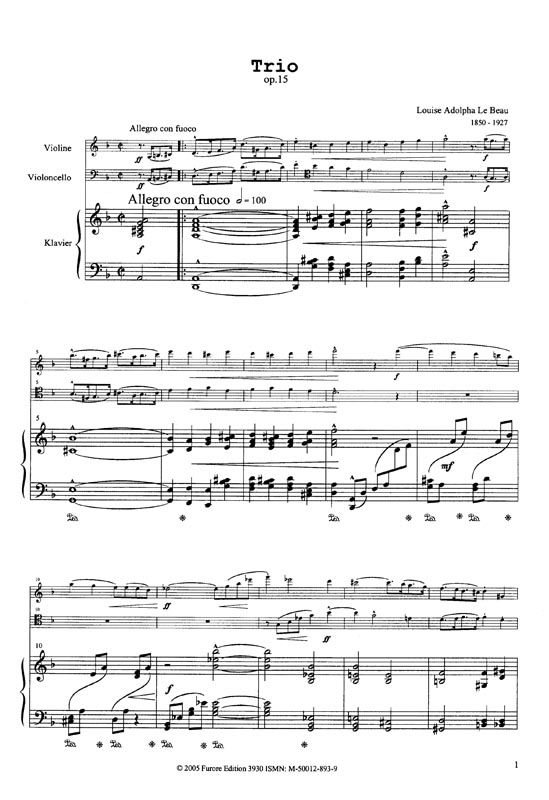
Louise Adolpha Le Beau
- Violon, Violoncelle et Piano
- Conducteur et parties
-
disponible
|
sera expédié dans 1-2 jours ouvrables


- Piano
- Partition à télécharger
-
disponible immédiatement
|
Télécharger immédiatement après la commande

- Quatuor de violoncelles
- Conducteur et parties
- Wolfgang Birtel
-
sera expédié dans 2-5 jours ouvrables

Nicola Antonio Porpora
- Violoncelle et Piano
- Partition
-
sera expédié dans 3-6 jours ouvrables





Julius Goltermann
- Violoncelle et Piano
- Partition
-
disponible
|
sera expédié dans 1-2 jours ouvrables