
Gustav Mahler
Symphony No. 8
Symphony of a Thousand

Gustav Mahler
Symphony No. 8
Symphony of a Thousand
- Formation Solistes, 2 Choeurs mixtes (SATB) et Piano
- Édition Réduction piano
- Compositeur Gustav Mahler
- Éditeur Karl Heinz Füssl
- Maison d'Édition Universal Edition
- N ° de commande UE2660
TVA incluse,
Hors frais de port
 disponible
|
sera expédié dans 1-2 jours ouvrables
Description:
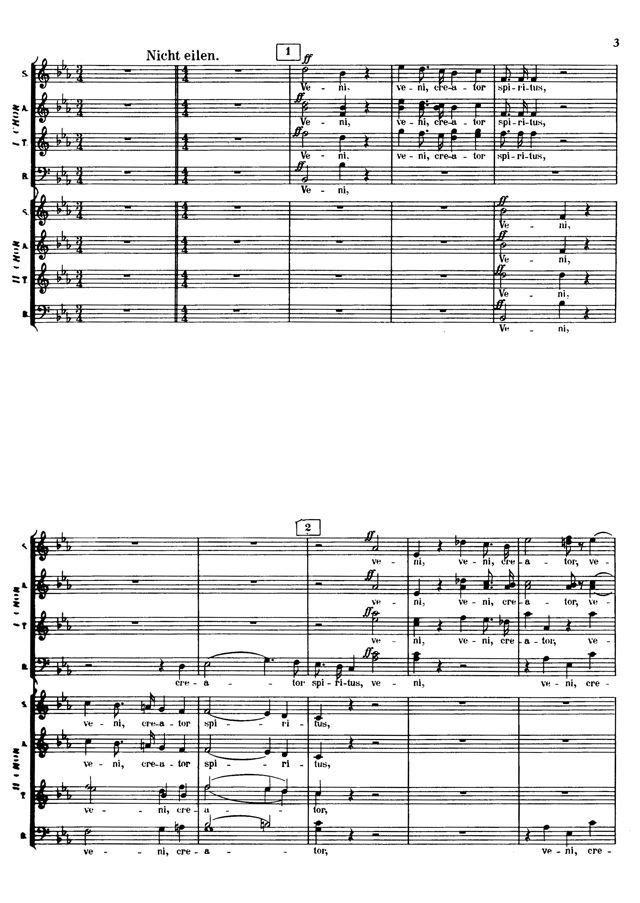
Gustav Mahler's Symphony No. 8 is a work of exceptions. Seen from the outside, this is true of the forces that are used: with its three choirs, eight soloists and an orchestra of far more than one hundred musicians, there are few similar works in the annals of music. This cast of performers determines the second exceptional element of the work, the mix of instrumental and vocal characteristics that makes it to the prototype of a 'vocal symphony', which - as Mahler put it - 'is sung from beginning to end'. In turn, the texts that are sung influence the structure of the whole, replacing, as it were, the usual four movements of a symphony with two strongly divergent 'parts'. And, finally, as if to emphasize this divergence, the texts used - the hymn Veni creator spiritus in the first part and the final scene of Goethe's Faust in the second - are not only written in two languages but also separated in their origins by more than one thousand years.
Thus it is a work of extremes, and a work of contradiction. It seems, however, that it was exactly these distinctive features that lifted the symphony above the others and convinced Mahler that his Symphony No. 8 was 'the greatest' work 'that I have composed'. It is an understandable coincidence that he thus raised Symphony No. 8 to the same rank within his oeuvre as Goethe, who claimed that the drama was his 'Hauptgeschäft' [main work], did with Faust. Even after composing his late works Mahler retained his belief that Symphony No. 8 was his 'opus summum'. (Christian Wildhagen)
Thus it is a work of extremes, and a work of contradiction. It seems, however, that it was exactly these distinctive features that lifted the symphony above the others and convinced Mahler that his Symphony No. 8 was 'the greatest' work 'that I have composed'. It is an understandable coincidence that he thus raised Symphony No. 8 to the same rank within his oeuvre as Goethe, who claimed that the drama was his 'Hauptgeschäft' [main work], did with Faust. Even after composing his late works Mahler retained his belief that Symphony No. 8 was his 'opus summum'. (Christian Wildhagen)
-
I.Teil: Veni, creator spiritus""
-
II.Teil: Schlussszene aus Goethes Faust II""
Les clients ont évalué ce produit:
Partitions depuis 1969

Depuis 1969, plus de 500 000 clients nous font confiance. Avec un vaste choix de plus de 1 000 000 partitions, nous sommes l'un des plus grands fournisseurs d'Europe. Grâce à notre grand stock, nous pouvons souvent expédier les partitions sous 24 heures. Quelles que soient les partitions que vous recherchez, vous êtes au bon endroit !
Votre Stefanie Reichert
Responsable du service client
Produits liés:

- Soliste et 2 Chœurs mixtes (SATB)
- Partition de chœur
- Karl Heinz Füssl
- Universal Edition
-
disponible
|
sera expédié dans 1-2 jours ouvrables

- Chœur des garçons
- Partition de chœur
- Karl Heinz Füssl
- Universal Edition
-
disponible
|
sera expédié dans 1-2 jours ouvrables

- 2 Chœurs mixtes (SATB)
- Partie seule Chœur soprano
- Karl Heinz Füssl
- Universal Edition
-
disponible
|
sera expédié dans 1-2 jours ouvrables

- 2 Chœurs mixtes (SATB)
- Partie seule Chœur alto
- Karl Heinz Füssl
- Universal Edition
-
disponible
|
sera expédié dans 1-2 jours ouvrables

- 2 Chœurs mixtes (SATB)
- Partie seule Chœur tenor
- Karl Heinz Füssl
- Universal Edition
-
disponible
|
sera expédié dans 1-2 jours ouvrables

- 2 Chœurs mixtes (SATB)
- Partie seule Chœur basse
- Karl Heinz Füssl
- Universal Edition
-
disponible
|
sera expédié dans 1-2 jours ouvrables
D'autres clients ont également acheté:

- Solistes, 2 Choeurs mixtes (SATB) et Piano
- Réduction piano
-
disponible
|
sera expédié dans 1-2 jours ouvrables
- Aussi disponible en téléchargement !

Karl-Josef Müller
- Littérature
- Livre
-
disponible
|
sera expédié dans 1-2 jours ouvrables

- Littérature
- Livre
-
sera expédié dans 3-6 jours ouvrables

Gustav Mahler
- Voix moyenne et Piano
- Réduction piano
-
sera expédié dans 3-6 jours ouvrables

- Chœur mixte (SATB) et Piano
- Réduction piano
-
disponible
|
sera expédié dans 1-2 jours ouvrables

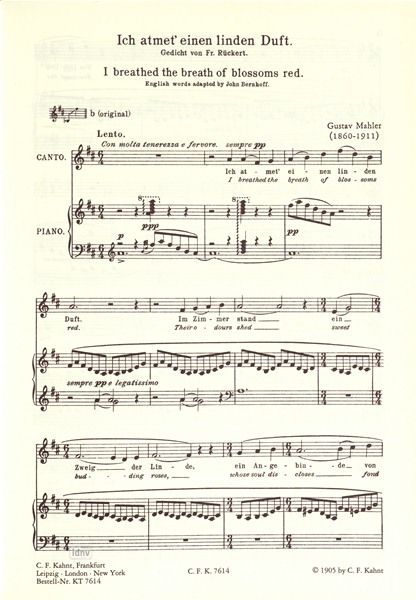
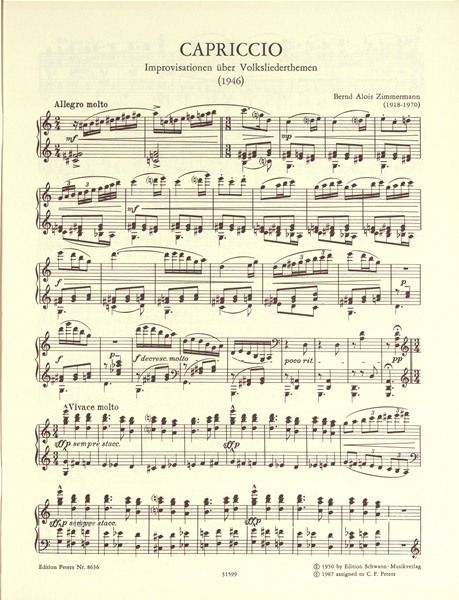
- Piano
- Partition piano
-
sera expédié dans 3-6 jours ouvrables